PACE · 10 min read · 2026-07-03
PACE Code C Detention Reviews — What Representatives Should Monitor
Unlawful detention undermines every subsequent interview. Representatives must track custody clocks, understand review stages, and make timely representations when continued detention is hard to justify. Detention review literacy is non-negotiable for PSRAS success and safe practice.
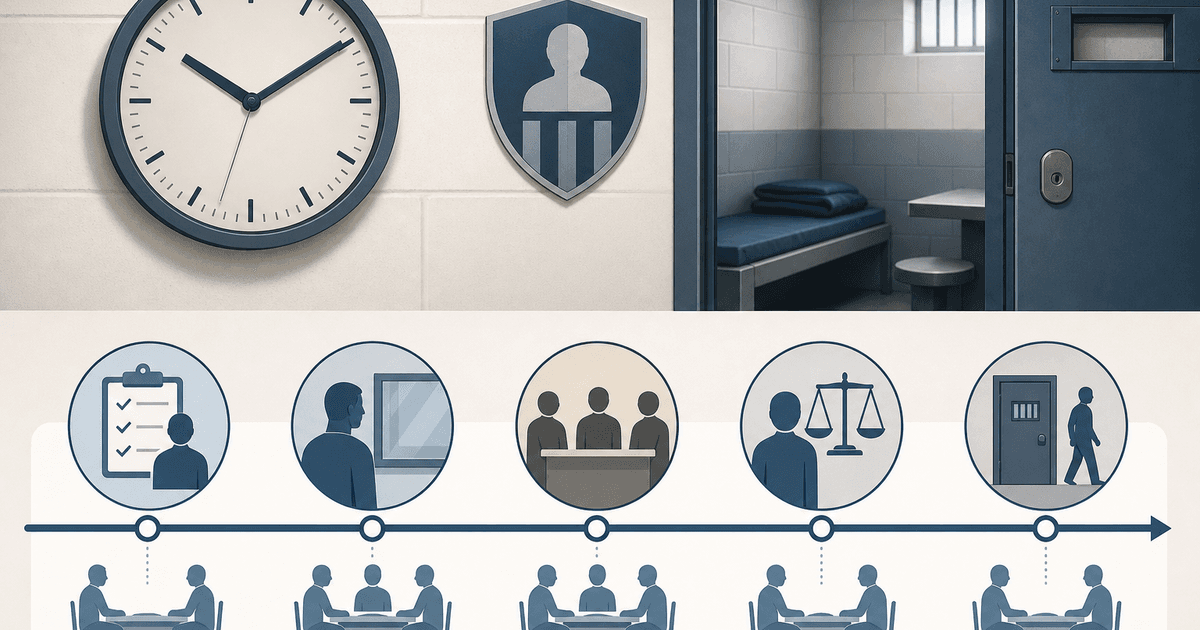
Custody clocks and authorised detention
Detention must be authorised and periodically reviewed by custody sergeants under Code C. Representatives should note arrest time, authorisation time, and scheduled reviews on arrival — discrepancies between custody staff oral briefing and the custody record are common and legally significant.
The clock affects when charge or release decisions intensify. Clients and officers may push interview forward as limits approach; reps balance client readiness against unlawful detention risk if reviews are mishandled.
PSRAS MCQs frequently test hour calculations and review intervals. Practise arithmetic under time pressure on PSR Train alongside reading Code C paragraphs on detention authorisation.
Representations at review points
Representatives may make representations at detention reviews — why further detention is or is not justified, disclosure delays, welfare concerns, or need for appropriate adults and medical attention before interview.
Calm factual representations outperform theatrical demands. Cite investigation stage, client cooperation, and concrete delays — “OIC promised CCTV download still not provided” — rather than generic “detention is unfair.”
If reviews occur without your attendance, request outcomes and note them. Absence does not waive your right to advise clients on detention lawfulness or to complain about procedural failures later through firm channels.
Release, charge, and warrant extensions
As limits approach, police may charge, release under investigation, bail, or seek extensions in appropriate serious cases. Clients need clear advice on each pathway — tie in with bail and RUI guidance in parallel revision.
Trainees should know when supervising solicitors expect escalation on continued detention without charge. Serious cases exceed standard trainee autonomy — early firm contact protects clients and your professional standing.
Document every review time you attend or enquire about. Portfolio assessors reward reps who show active clock awareness, not passive presence in the interview room only.
Study drills and scenario integration
Run CIT scenarios with explicit clock pressure — interview offered at hour nine with no charge decision. Practise ordering: check review history, consult client, represent on detention if needed, then interview advice.
Combine detention topics with first-hour custody checklists for holistic Code C maps. Identification of unlawful detention can affect interview strategy — another reason to prioritise clocks early.
England and Wales Code C framework; extension procedures for serious arrestable offences have additional rules worth targeted revision beyond this overview.