PSRAS Prep · 8 min read · 2026-06-25
PSRAS Timed MCQ Techniques — Pacing, Traps, and Review
PSRAS multiple-choice papers reward accuracy under time pressure. Slow perfectionists and reckless guessers both fail. These techniques help police station representative candidates pace papers, spot trap answers, and use practice data from PSR Train and firm quizzes to sharpen speed without sacrificing Code C precision.
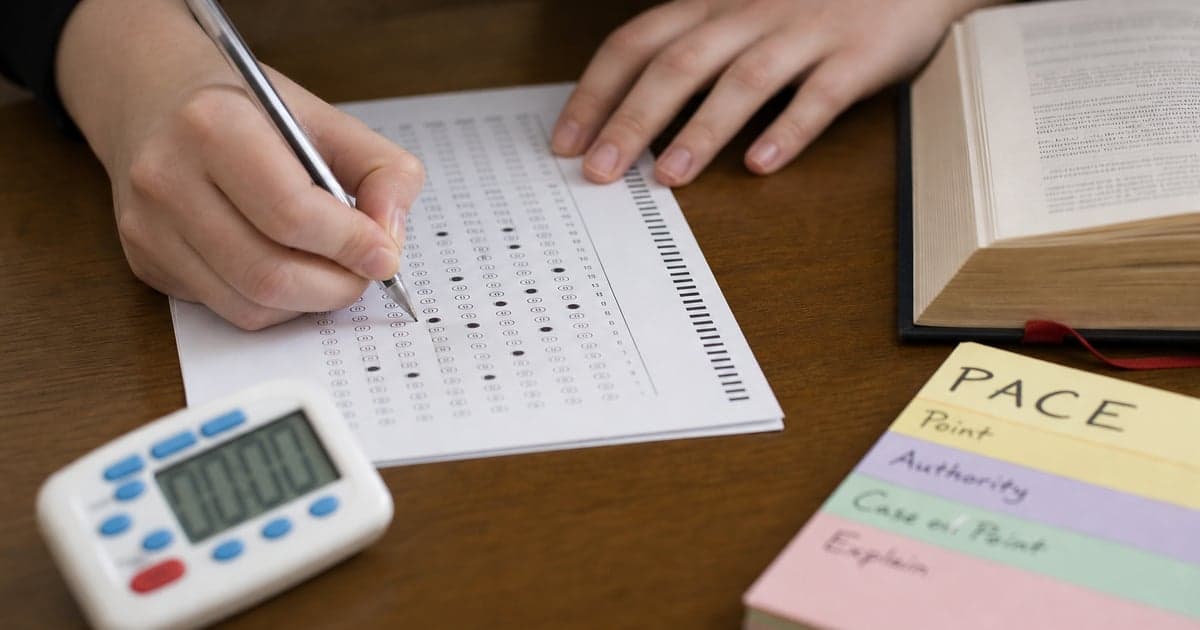
Pacing: the two-pass method
On timed papers, use a two-pass approach. First pass: answer questions you can resolve quickly with confidence, flagging harder items. Second pass: return to flagged questions with remaining time. This prevents ten minutes lost on one nightmare identification question while easy ethics marks remain unattempted.
Set a per-question budget from total time divided by question count — then add slack for review. PSR Train mock modes help internalise pace; practise with the same timer you expect on assessment day where possible.
If stuck beyond your budget, mark your best elimination guess, flag, and move. Returning with fresh eyes often dissolves false dilemmas created by exam adrenaline.
Reading for trap answers
PSRAS MCQs love legally plausible wrong answers — options that apply in custody but not voluntary interview, or rights that exist but not at the suggested stage. Read the stem twice for scenario stage: arrival, consultation, interview, release.
Absolute words — always, never, must in all circumstances — should trigger caution. Code C exceptions exist for urgency, vulnerability, and operational necessity. Trap options ignore exceptions.
Compare paired options carefully. Examiners often set two answers differing by one word — “appropriate adult” versus “interpreter,” or “detention review” versus “charge review.” Slow down on those pairs even when overall pace matters.
Elimination and educated guessing
When guessing, eliminate options contradicting core Code C principles you know firmly — wrong caution wording, inappropriate strip search authority, or interview without caution. Choose among remaining options using probability, not superstition.
Track guess questions in practice logs. High guess rates with passing scores suggest knowledge gaps masked by luck; low guess rates with slow times suggest over-caution. Adjust technique accordingly.
Never leave blanks on papers that do not penalise wrong answers unless you truly have no elimination basis — blank marks are zero; educated guesses sometimes climb above that.
Building speed through deliberate practice
Speed comes from pattern recognition built by hundreds of varied questions — not from rushing reading. Daily short timed sets on PSR Train beat occasional marathon sessions for neural familiarity with question styles.
After each set, log average seconds per question and accuracy by topic. Speed without accuracy is worthless for PSRAS; aim to bring identification and detention topics to automaticity first because they recur heavily.
Combine MCQ drills with one weekly CIT scenario so knowledge units stay tied to application. Timed techniques serve the wider goal of competent police station representation in England and Wales, not merely exam completion.